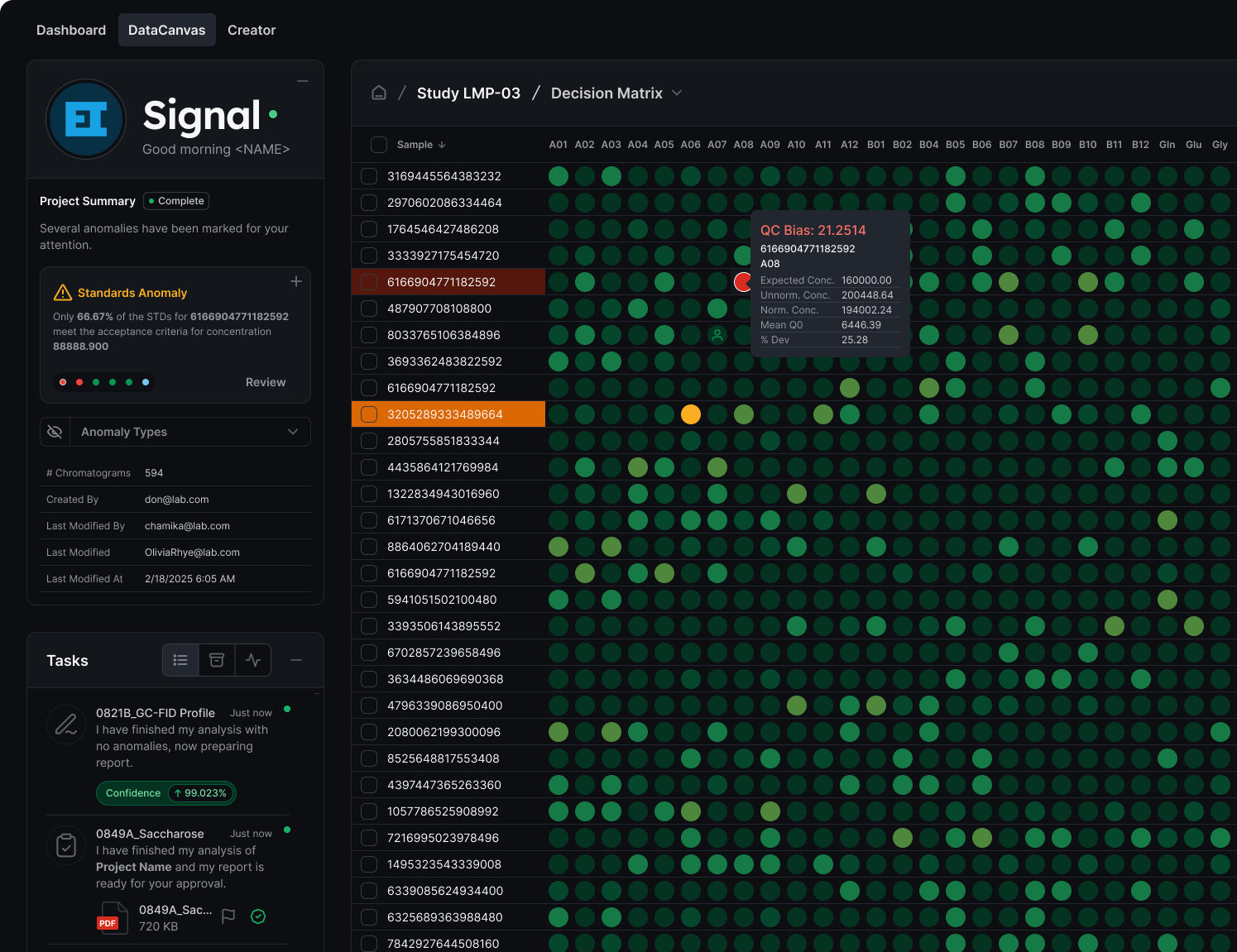

AI is accelerating drug development.
Scientific judgment is bottlenecked in the wet lab.
Automate routine analytical review across DMPK, CMC, and QC.
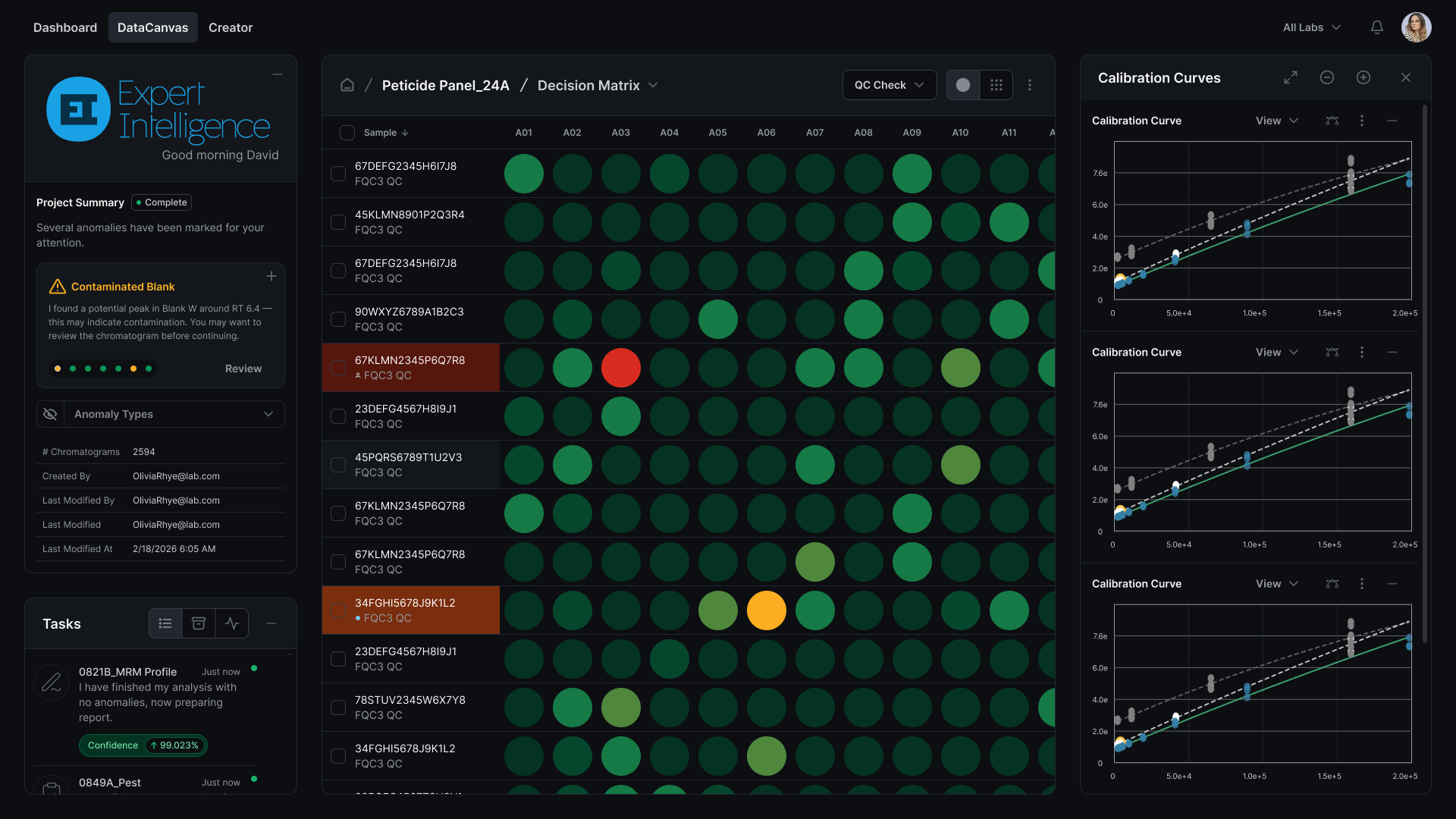
AI developed by your scientists, trained on your data, and validated against your SOPs.
99.9% Accuracy.
Zero Hallucinations.
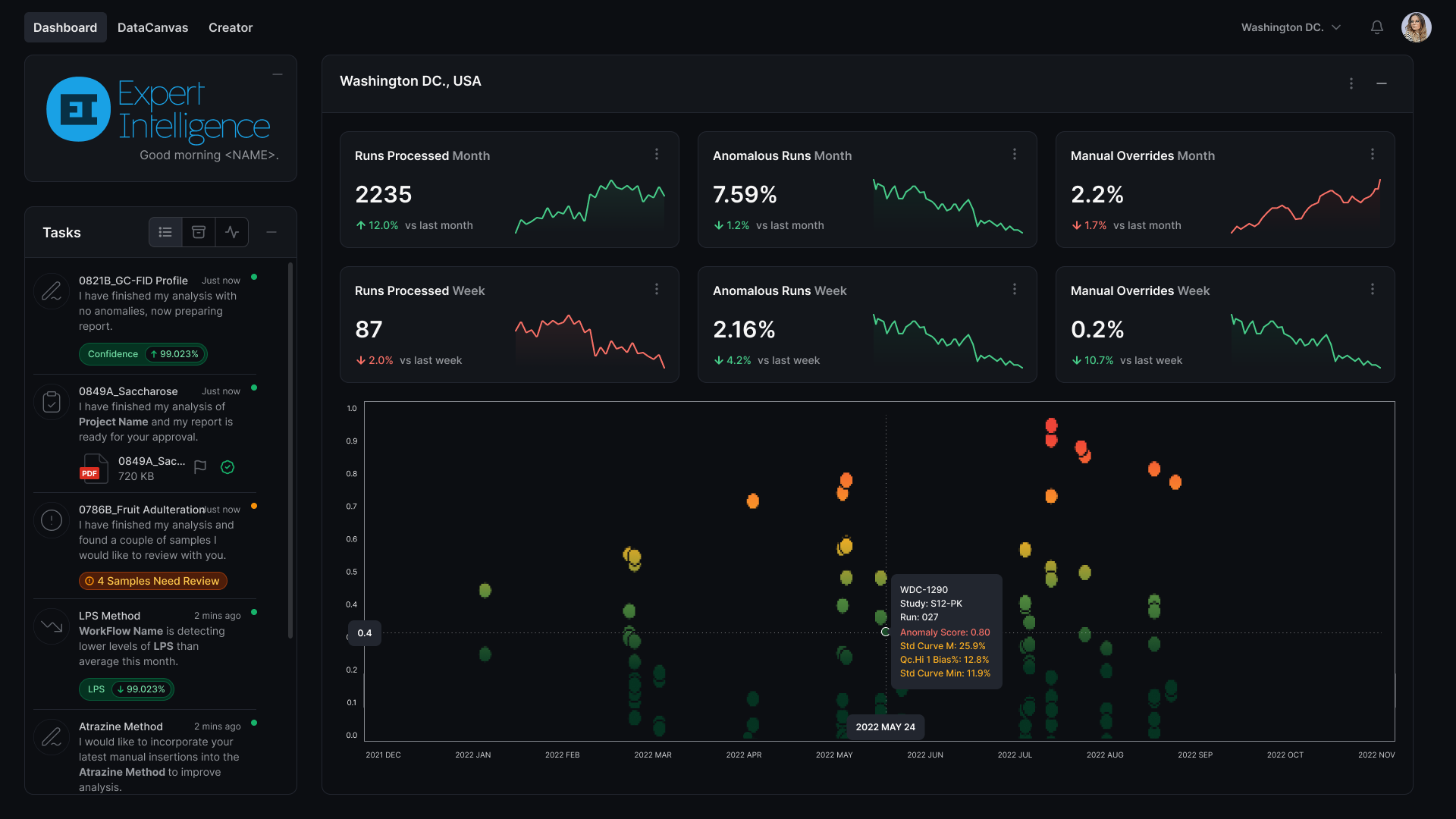
Your science sharpens every portfolio decision.
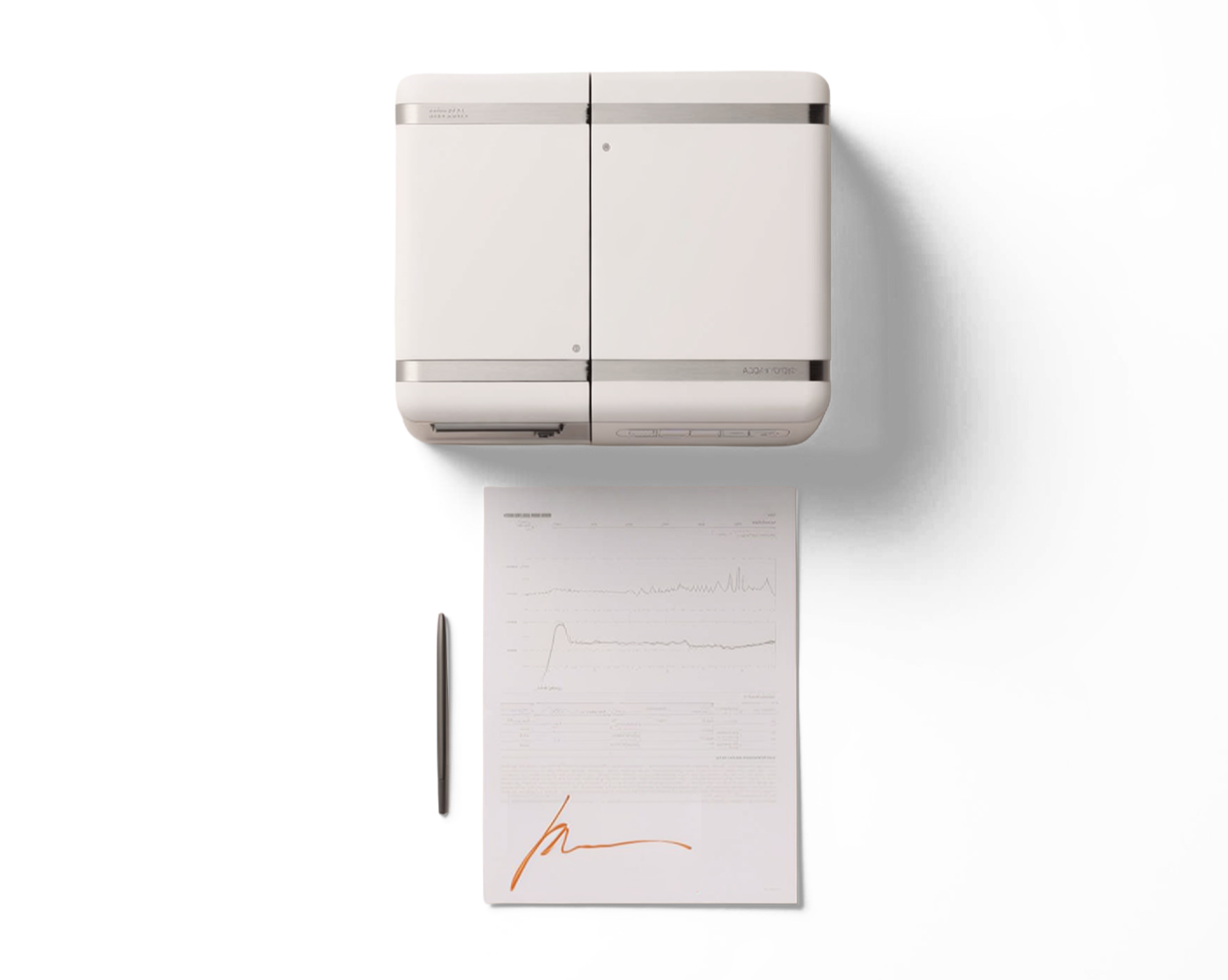
See deeper into your data, make the call with confidence, and compress time and cost from lab to launch.
The decision layer that
scales scientific understanding.
Analysis in Minutes,
Not Months
50×
Faster Review
Batch review cycles are significantly shortened while maintaining rigor and traceability.
Analyst-Validated,
Production-Proven.
7×
Increased Accuracy
Exception-only review reduces errors by eliminating repetitive manual decisions.
Actionable Results,
In Real Time.
10×
Faster Time to Value
Operational impact is achieved in days, by turning instrument data into lab intelligence.
“We spent 18 years on this problem. Expert Intelligence solved it in 4 months.”
— Leading US Clinical Diagnostic Company
Frequently asked questions.
-
EI is scientist-trained AI for regulated laboratories. It learns how your scientists interpret instrument data, applies that judgment consistently, and connects results across labs so each decision benefits from what your organization already knows.
-
EI Flow automates analytical review for each run, applying your scientists’ judgment to produce consistent, traceable results. EI Signal weaves those results across time, methods, workflows, and labs into one intelligence fabric. Used together, they create a continuous path from each analytical decision to a deeper understanding of change and greater confidence in what comes next.
-
EI supports analytical workflows across DMPK, CMC, and QC, from development through manufacturing and quality. It can begin with one repeatable workflow and expand across internal labs and external partners.
-
No. EI scales your scientists’ expertise rather than replacing it. They define the standard, govern how it is used, and remain in control of the decisions that require scientific judgment.
-
EI is built specifically for laboratory data and scientific decisions. Its foundational model reads instrument signals, learns only from your scientists’ reviewed work, and produces deterministic results. It routes uncertainty to your experts instead of generating an answer.
-
EI is vendor-agnostic and works with the instruments, data formats, LIMS, and enterprise systems your lab already uses. The integration is configured around your existing environment rather than requiring you to replace it.
-
EI is designed to support regulated workflows through controlled access, audit trails, electronic records, model versioning, traceability, and validation documentation. Your organization remains in control of validating each intended use.
-
You do. Your data remains within the deployment environment you approve, is never mixed with another customer’s data, and remains your institutional IP. The models your scientists create from that data remain yours as well.
-
We start with one high-value method and your scientists’ reviewed examples to establish accuracy and value in your environment. After the model is validated and deployed, you can extend EI method by method across the lab
See it in action.
Request a demo and see how trusted results compress the time and cost of drug development.